Broken Fingers+ · 品牌誌
Autism Craft Examples That Honor Real Skills

A stitched card holder, a carefully burnished leather edge, or a hand-stamped tag may look like a small finished object. Yet the best autism craft examples show something much larger: what becomes possible when a person has time, clear tools, and work that is treated with real respect.
Craft should never be used to reduce autistic people to an inspiring story or a decorative outcome. It can, however, offer a meaningful space for expression, routine, skill building, and paid contribution. The difference lies in the approach. A thoughtful craft program begins with the person, not the project.
Why autism craft examples need more than good intentions
Autism is not one experience, and no single activity suits everyone. Some people enjoy repetition and precise sequences. Others are drawn to color, texture, independent experimentation, or a finished object with a clear everyday use. Sensory preferences, communication styles, motor abilities, energy levels, and personal interests all matter.
That is why a craft activity should not be framed as a way to "fix" behavior or keep someone occupied. Its value comes from offering genuine choice and an achievable path to making something. A person may find satisfaction in assembling one component repeatedly; another may want to design the whole piece from start to finish. Both roles are valid.
When craft is connected to real standards - a wallet that can be carried every day, a key tag made for gifting, a pouch that protects small essentials - the maker's contribution becomes visible. The work is not charity merchandise. It is a useful item shaped by attention, practice, and individual skill.
Autism craft examples with a purpose
The most successful projects balance creative freedom with a process that feels understandable. They can be simplified without becoming childish, and repeated without becoming meaningless.
Leather key tags and stamped accessories
A leather key tag is a strong starting point because it has a clear function and a manageable production sequence. A maker can choose the leather color, select a stamp, punch a hole, attach hardware, and finish the edge. Each stage can be taught separately, then gradually combined.
This project also allows for different levels of participation. Someone who enjoys visual decisions may focus on color pairing and stamp placement. Someone who prefers steady handwork may specialize in edge finishing or hardware assembly. The final piece remains cohesive because every task contributes to its quality.
Card holders built through repeatable steps
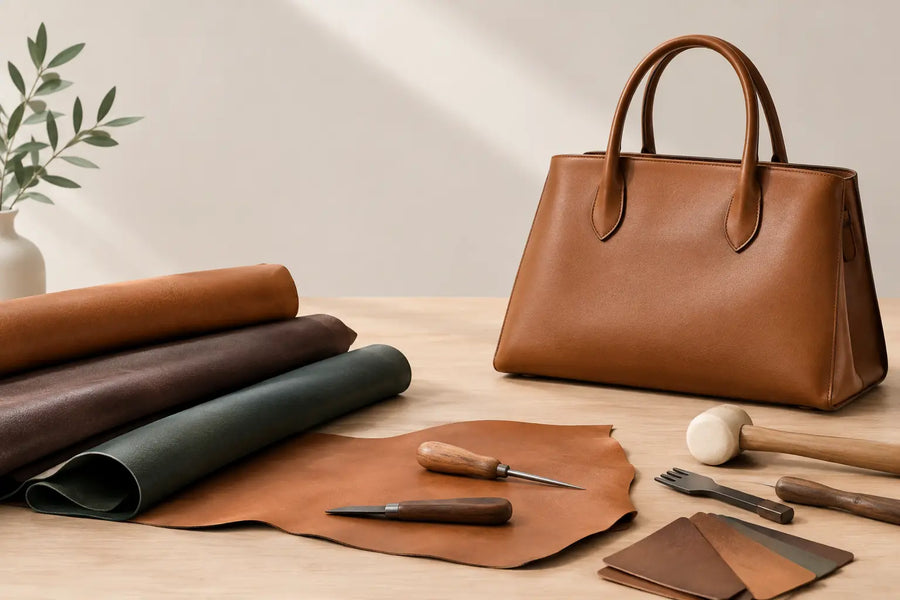
A simple card holder introduces useful leatherworking techniques without requiring an overwhelming number of decisions. Cutting, applying adhesive, punching stitch holes, saddle stitching, and burnishing edges can be organized into clear stations.
For some makers, visual guides work better than verbal instructions: a sample piece, numbered trays, color-coded tools, or a photo of each completed stage. Others may prefer to observe once and begin immediately. Offering more than one way to learn is not lowering expectations. It is making expectations accessible.
Hand-stitched pouches for daily use
A small zip pouch or coin purse can become a satisfying longer-term project. It asks for patience, but it also gives the maker a substantial finished object to hold, use, or offer as a gift. Repeated stitching can be calming for some people, while others may prefer preparing pieces, setting snaps, or checking finished work.
The trade-off is that a multi-step pouch may create fatigue if introduced too quickly. Break the work into sessions with a natural stopping point. Completion matters, but so does leaving the table with enough energy to want to return.
Pattern, color, and texture-based accessories
Not every meaningful craft needs to be built around stitching. Leather patches, luggage tags, bookmarks, or small accessories can invite visual design through embossing, paint, texture, and color blocking. These projects make room for personal aesthetic choices while maintaining a product structure.
Avoid assuming that sensory-rich materials are always enjoyable. The sound of a hammer, the smell of leather, sticky adhesive, or a rough unfinished edge may be pleasant for one maker and uncomfortable for another. Provide alternatives such as quieter hand presses, low-odor materials, gloves, or a separate low-stimulation workspace.
What makes a craft setting supportive
The environment around the work often matters as much as the project itself. Clear routines can reduce uncertainty, but routines should not become rigid rules that leave no room for preference. A good workshop makes the next step visible while allowing people to ask for a pause, a different tool, or help.
Useful supports may include a dedicated workstation, a sample of the finished item, written or picture-based instructions, and tools arranged in the order they will be used. Time estimates can help too, especially when they are honest. Saying that a task takes 20 minutes when it may take an hour can create unnecessary pressure.
Feedback should be specific. Instead of saying, "Good job," name what was done well: "Your stitches are evenly spaced," or "You checked the corners carefully before gluing." Specific feedback recognizes the actual work and makes improvement easier to understand.
Most importantly, do not confuse independence with being left alone. Independence can mean choosing how to complete a task, knowing where to find a tool, or deciding when to request assistance. Support and autonomy are not opposites.
From activity to dignified work
Craft becomes especially powerful when it opens a route to contribution that is acknowledged fairly. That might mean selling finished goods, paying makers for their labor, crediting their role in production, or building responsibilities around quality control, packaging, inventory, and customer orders.
Not every person wants employment through craft, and not every hobby needs to become a business. Turning every creative moment into output can take away its joy. But for people who do want to build vocational skills, a workshop should offer more than symbolic participation. It should provide training, dependable standards, appropriate compensation, and opportunities to grow.
At Broken Fingers+, leathercraft is approached with this belief: a product can carry both refined design and the evidence of human capability. The person behind a handmade piece is not a marketing device. They are a maker whose patience, learned technique, and contribution deserve to be seen.
How to choose an appropriate project
Start by asking what the maker wants from the experience. Is the goal a quiet creative break, a new technical skill, a social activity, or a path toward paid work? The answer shapes the right project more effectively than any diagnosis ever could.
Then consider the task itself. A good fit has a visible purpose, materials that feel manageable, and steps that can be adjusted without changing the maker's dignity. Offer choices that are real: two leather colors, several tools, a choice to stitch or assemble, or the option to continue next time.
Quality standards are also a form of respect. Teach the maker how to recognize a clean edge, a secure snap, or an aligned stitch line. If a piece needs revision, present that as part of craft, not as failure. Experienced artisans revise work too.
The value held in a finished piece
A handmade item does not need to be perfect to be worthy. Its value may sit in the careful rhythm of the stitches, the confidence built through practice, or the fact that its maker was given room to decide, learn, and contribute.
The next time you see a card holder, key tag, or pouch made in an inclusive workshop, look beyond the label. Consider the conditions behind it: whether the maker had choice, whether their skills were taken seriously, and whether the work created a place where ability could be recognized. That is where a small object can hold something lasting.