Broken Fingers+ · 品牌誌
永續皮革設計趨勢 for More Meaningful Everyday Goods
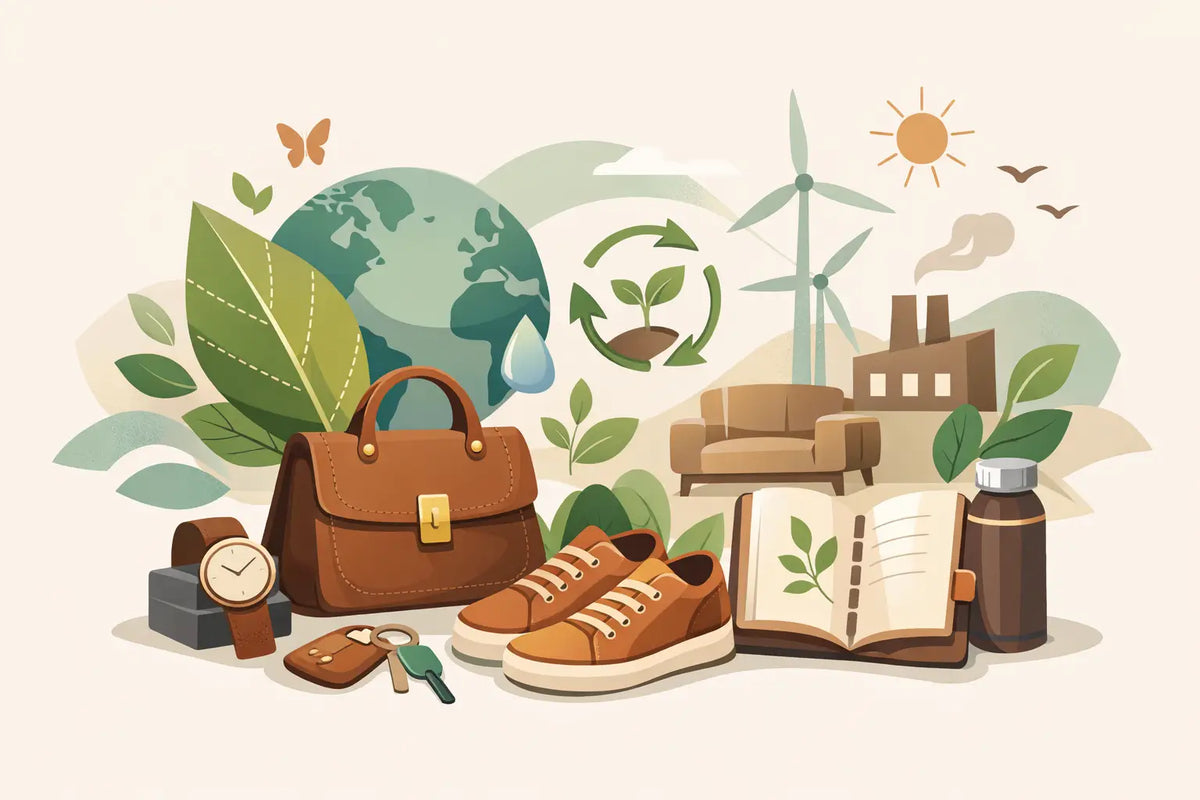
A wallet is held hundreds of times before it wears out. A bag rests against a shoulder on crowded commutes, carries a passport across borders, and becomes part of the small routines that make a life feel organized. That closeness is why 永續皮革設計趨勢 matters: the future of leather goods is not only about what a material is made from, but also how long it stays useful, whose hands make it, and whether its story can be told honestly.
For people who choose accessories with care, sustainability is no longer a beige label or a vague promise. It is visible in the grain of a material, the strength of a stitch, the ability to repair a worn edge, and the respect given to every maker involved. The best designs ask us to buy less casually, then enjoy what we choose more deeply.
永續皮革設計趨勢 is moving beyond material substitution
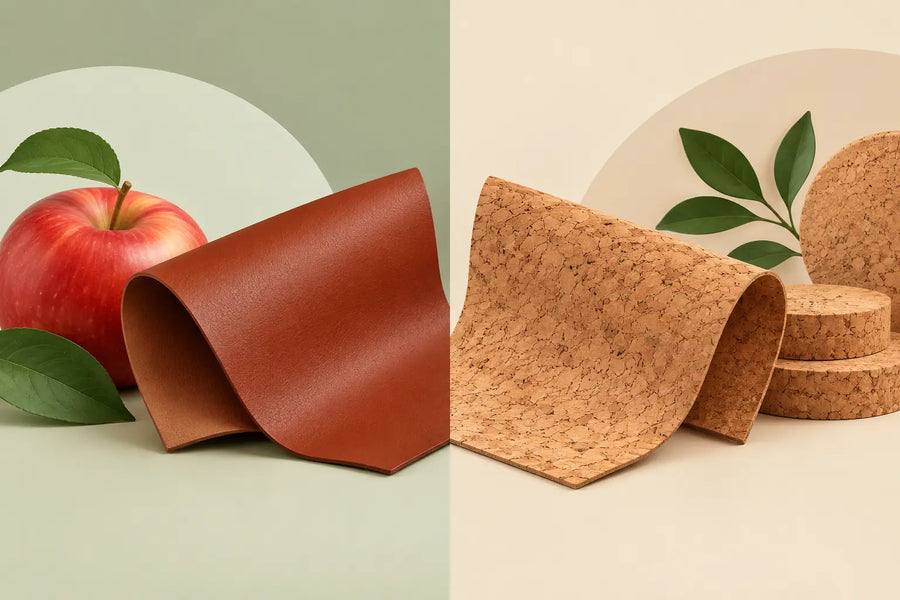
Alternative materials have expanded what leather design can be. Apple leather, made in part from apple-processing byproducts, gives designers a way to turn an existing waste stream into a new surface for small accessories. It can offer a clean, contemporary finish and a lighter feel that suits card holders, wallets, and compact bags.
But a material’s origin is only one part of its footprint. Many plant-based leather alternatives include synthetic binders or protective coatings to achieve durability, water resistance, and a leather-like hand feel. That does not make them a poor choice. It means brands should be clear about composition instead of suggesting that every plant-derived material is fully natural or automatically low-impact.
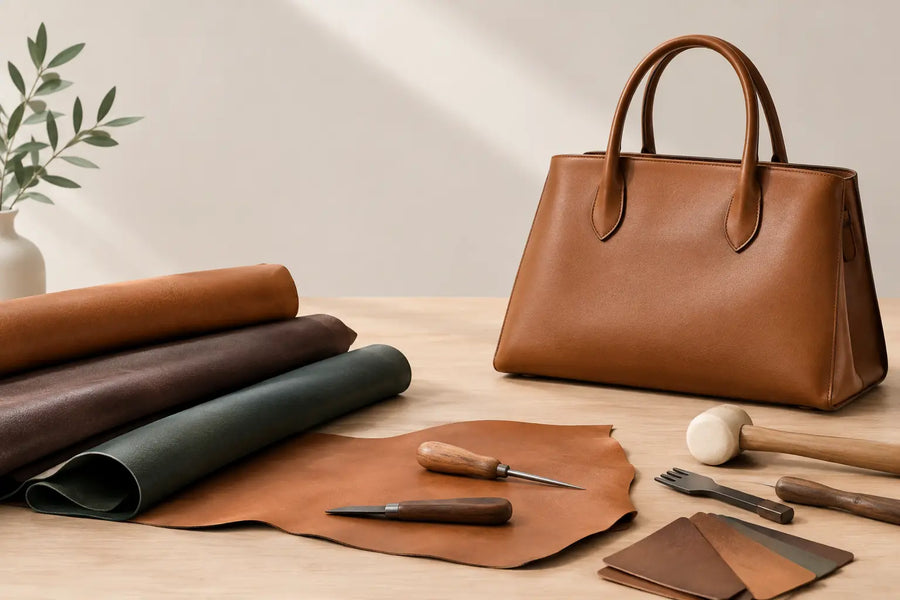
The same honesty applies to animal leather. Well-made leather can last for many years, develop character with use, and be repaired rather than replaced. Yet its environmental and ethical considerations vary widely depending on tanning methods, chemical management, traceability, and how the hide enters the supply chain. There is no universal winner between genuine leather and alternative leather. The more useful question is whether a specific piece has been designed to earn a long life.
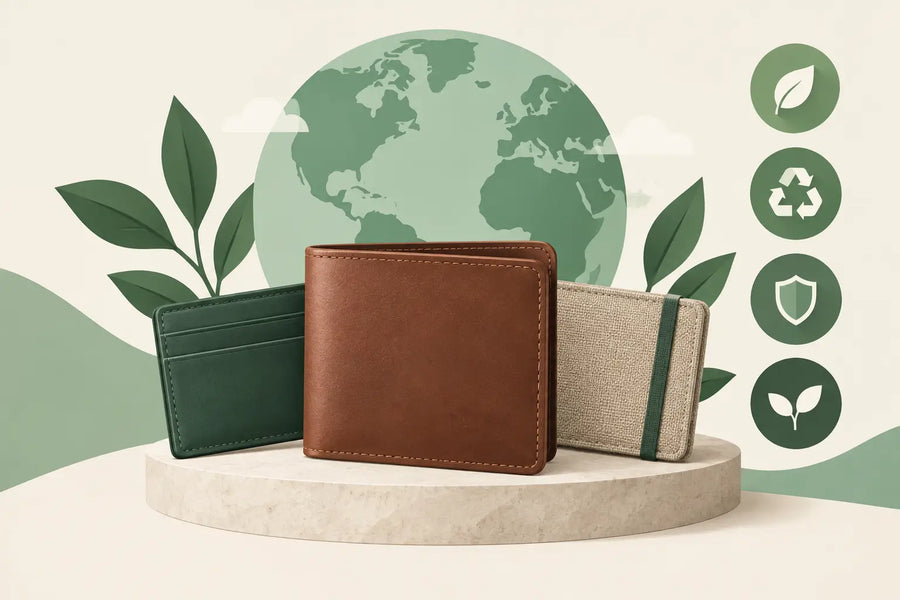
For shoppers, this shifts the conversation from “Which material is perfect?” to “What am I buying, how will I use it, and will I still want it in three years?” A slim apple leather card holder used every day may be a thoughtful choice. A genuine leather bag that is carefully maintained and carried for a decade may be one too.
Durability is becoming a design decision
A sustainable accessory should not demand a perfect owner. It should withstand the ordinary: keys dropped into a tote, an overfilled wallet, a rainy walk, the pressure of daily use. That is why construction is becoming as central as material selection.
Hand stitching has particular value here. When stitching is clean and intentional, it can be easier to assess, maintain, and in some cases repair. Reinforced stress points, carefully finished edges, and hardware chosen for longevity may seem like quiet details, but they determine whether a piece stays in circulation or becomes waste after a single season.
This does not mean every product needs to be built like luggage. A slim card case has different needs from a work tote, and a soft pouch may be deliberately light rather than heavily structured. Good sustainable design matches construction to the job. Overbuilding uses more material than necessary; underbuilding asks customers to replace things too soon. The thoughtful middle ground is where design becomes responsible.
Repairability brings care back into the relationship
For years, fashion trained people to view visible wear as failure. A scratch, softened corner, or darkened handle was treated as a reason to move on. Leather goods offer another possibility: use can become evidence of a shared history.
Repairable design supports that relationship. Replaceable parts, accessible seams, and materials that can be cleaned or conditioned give owners more options before disposal. Even when formal repair is not available, clear care guidance can extend a product’s useful life significantly. Keep leather away from prolonged direct sun and heavy moisture, avoid overstuffing pockets, and clean surface marks gently with a method suited to that specific material.
Alternative leathers also require material-specific care. Some coated surfaces should not be treated with traditional leather conditioners, while some may be more vulnerable to heat or abrasion along folded edges. A brand that provides accurate instructions is not adding an afterthought. It is helping the object remain useful.
Smaller, more intentional collections are gaining ground
Another visible design trend is restraint. Instead of releasing endless variations, more thoughtful makers are focusing on a smaller range of useful forms: a card holder that fits a daily commute, a zip wallet that keeps essentials secure, a passport cover that makes a meaningful travel gift, or a bag designed around real carrying habits.
This approach can reduce unnecessary sampling and excess inventory, but it also makes space for refinement. A design can be tested, adjusted, and made better over time rather than replaced by a new shape simply because the calendar changed. Colors become more considered. Compartments serve a reason. The product begins with a person’s daily life, not a trend forecast alone.
For customers, choosing a more focused piece can feel freeing. A well-proportioned wallet in a color you genuinely enjoy has more staying power than a novelty item purchased for a brief mood. Sustainable consumption is not about denying beauty. It is about choosing beauty that keeps its place in your life.
The people behind the product are part of the design
Material sustainability without human dignity is incomplete. A leather good carries the time, attention, and skill of the person who cut, stitched, finished, and checked it. When those contributions are hidden, it becomes easier to treat handmade work as interchangeable and labor as a cost to be minimized.
The stronger direction in sustainable design is traceable craft: showing how things are made, acknowledging the people involved, and creating production environments where makers can build confidence as well as skills. This matters especially when craft can become a path toward meaningful work for people who are too often underestimated.
At Broken Fingers+, collaboration with sheltered workshops places this belief into the making process. Each piece is connected not only to practical training and paid work, but also to the conviction that ability deserves room to grow. The goal is not charity attached to an object. It is an object made with care, carrying the evidence that someone’s contribution has been seen and valued.
That distinction changes how we understand a purchase. The social impact is not separate from the product’s quality. Patience, repetition, and pride in craft are part of what make a hand-finished item worth carrying.
Emotional durability may be the most overlooked trend
People keep what means something to them. This is sometimes called emotional durability, but it can be understood more simply: an object lasts longer when it feels personal, useful, and loved.
A gift chosen for someone beginning a new job, a passport holder carried on a first solo trip, or a wallet bought to mark a fresh start can hold meaning beyond its function. Thoughtful design leaves room for those moments. It does not need to shout about its values. It needs to feel good in the hand, work well in daily life, and remain connected to a story the owner wants to remember.
This is also why craftsmanship should never be used to excuse poor usability. A beautiful bag with an awkward closure will be left at home. A meaningful card holder that cannot hold the cards someone actually carries will not become a companion. Emotion lasts when function is dependable.
What to look for before choosing a leather accessory
Before purchasing, take a moment to ask a few direct questions. Is the material clearly described, including what gives it its finish and durability? Does the construction suit the way you will use it? Can you find care information without guessing? Does the design feel versatile enough for your everyday rhythm? And does the brand explain who makes its products and what that work supports?
You do not need to make a flawless choice to make a better one. Sustainability is rarely a single claim printed on a tag. It is a series of decisions made by designers, makers, and customers over time.
Choose the piece you will reach for often. Care for it when it asks for attention. Let its marks become part of its character, and let your purchase support the kind of making you want to see more of.