Broken Fingers+ · 品牌誌
Apple Leather Versus Cork: Which Feels Right?
A wallet is held dozens of times before its details are noticed. The surface warms under a palm, catches light at the edge, and slowly becomes part of a daily rhythm. That is why apple leather versus cork is more than a question of what looks greener. It is a choice about touch, use, care, and the kind of story you want an everyday object to carry.
Both materials offer an alternative to conventional animal leather, but they do not behave alike. One can feel sleek and structured; the other brings an organic texture that is impossible to repeat exactly. Neither is automatically the right answer for everyone. The better choice is the one that fits your habits and the values you want to keep close.
Apple Leather Versus Cork: Start With the Material Story
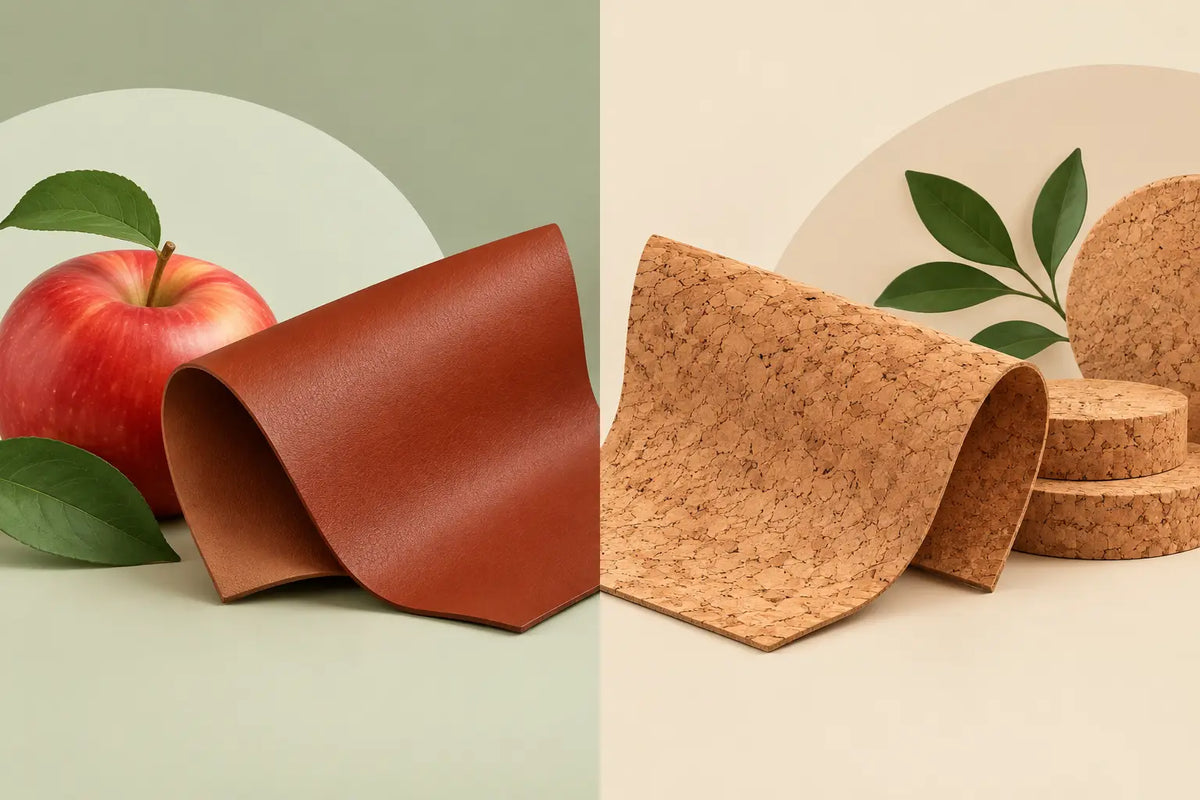
Apple leather is generally made by processing byproducts from the apple industry, such as skins and cores left after juice or food production. The resulting apple-based material is often combined with binders and finished on a fabric backing to create a flexible, leather-like sheet. Its exact composition varies between manufacturers, which matters when assessing durability, plastic content, and environmental impact.
Cork comes from the outer bark of cork oak trees. The bark can be harvested without cutting down the tree, then processed into sheets or composite material for accessories. Cork fabric is usually backed with textile for strength and easier construction. Its surface retains the small pores and variations of the natural bark, making every piece slightly individual.
The responsible choice is not simply about choosing a material with a natural-sounding name. Ask how it is made, how long it is likely to last, and whether it has been turned into something worth repairing, carrying, and caring for. Material innovation matters most when it supports a longer relationship with the object.
How Apple Leather and Cork Feel in Daily Use
Apple leather usually has a more refined, even appearance. Depending on its finish, it can be smooth, lightly grained, matte, or softly polished. It works beautifully for structured card holders, wallets, and bags where clean lines are part of the design. For someone who prefers a minimal accessory that pairs easily with workwear or formal outfits, its restrained look can feel especially natural.
Cork has more visual movement. Its markings, speckles, and grain bring a warmer, more tactile character. It feels light in the hand and often appeals to people who want their accessories to look less manufactured and more connected to the natural world. A cork piece can make a simple pouch or passport holder feel personal without needing a bold color or printed pattern.
There is a practical side to that difference. The uniform finish of apple leather can make it easier to coordinate with a polished, monochrome wardrobe. Cork is better suited to someone who enjoys variation and sees the irregularities as part of the beauty, not a flaw. If you are buying a gift, think about the recipient's habits as much as their favorite color.
Structure, flexibility, and weight
Apple leather commonly offers more structure than cork, particularly in products with folded corners, stitched compartments, or crisp silhouettes. It can hold a clean shape in a slim wallet or a small bag while still feeling soft enough for daily handling.
Cork is remarkably lightweight and naturally flexible, though it may not create the same sharply tailored profile. It is a lovely choice for accessories meant to travel lightly, such as card sleeves, coin pouches, and small organizers. For larger pieces that need to hold their form, construction quality becomes especially important.
Durability Is More Than a Material Claim
No accessory lasts because of a label alone. The thickness of the material, strength of the backing, quality of the stitching, edge finishing, and the care it receives all shape its life. A thoughtfully made piece can serve someone for years, while a poorly constructed item can fail quickly no matter what it is made from.
Apple leather may show wear at high-friction points like corners, folds, and handles. Over time, some finishes can crease or develop surface abrasion. This does not make it unsuitable for daily use, but it does mean a slim card holder may age differently from a tote carried against rough denim every day.
Cork is naturally water-resistant because of its cellular structure, and it is less likely to absorb a brief splash immediately. But water-resistant does not mean waterproof. Seams, fabric backing, hardware, and prolonged moisture still need care. Cork can also crack or tear if repeatedly bent beyond its natural flexibility, especially if it dries out or has a very thin finish.
For either material, choose the product type with honesty. A compact wallet stored in a pocket or bag faces a different life from a work bag loaded with a laptop, charger, and water bottle. Matching the material to the task is one of the simplest forms of sustainable buying.
The Environmental Question Needs a Clearer Answer
Apple leather gives new purpose to agricultural byproducts that might otherwise be discarded. That is meaningful, especially when materials are designed to reduce dependence on animal hides. Yet many apple-based leather alternatives include synthetic binders or coatings, so they should not be described as fully natural or automatically biodegradable.
Cork has a compelling renewable-resource story because cork oak trees remain standing while their bark is harvested. It is a material with a long history, and its naturally low weight can be useful in accessories. Still, processing, backing textiles, dyes, adhesives, shipping, and manufacturing all contribute to its overall footprint.
The more useful question is not, “Which one is perfect?” It is, “Which piece will I use enough to justify the resources behind it?” An accessory that becomes a trusted part of your routine, rather than a short-lived trend, is usually the more thoughtful purchase.
Choosing the Right Material for Your Life
Choose apple leather if you prefer a smooth, contemporary finish, want a more structured silhouette, or need an accessory that moves easily between a workplace, dinner, and travel. It is often a strong fit for those who love a clean design language and want a non-animal material that still resembles classic leather goods.
Choose cork if texture matters to you, if you enjoy natural variation, or if a very lightweight accessory would make your day easier. It can be especially appealing for a gift because no two surfaces look exactly the same. The material quietly reminds us that individuality is not something to smooth away.
At Broken Fingers+, material is only one part of the object’s meaning. The patient work behind a stitched edge, folded corner, or finished seam is also a record of practice and capability. When craftsmanship creates real opportunities for people to be seen for their skills, an accessory can carry more than essentials. It can carry respect.
Care That Helps Both Materials Last
Keep apple leather and cork away from prolonged direct sunlight, high heat, and humidity. If a spill happens, blot it gently with a soft, dry cloth rather than rubbing hard. Avoid harsh cleaners, alcohol-based wipes, oils, and conventional leather conditioners, which may damage coated surfaces or leave uneven marks.
Store small accessories in a dust bag or drawer when not in use, away from sharp items that can scratch or puncture them. Do not overfill pockets or force a folded piece to stretch beyond its intended shape. These small habits protect the stitching and structure as much as the material itself.
A well-chosen wallet or bag does not need to announce its values loudly. It only needs to feel good in your hands, work faithfully through ordinary days, and remind you that thoughtful design can make room for both beauty and dignity.