Broken Fingers+ · 品牌誌
手工皮件為何比較貴? The Value Behind Every Stitch
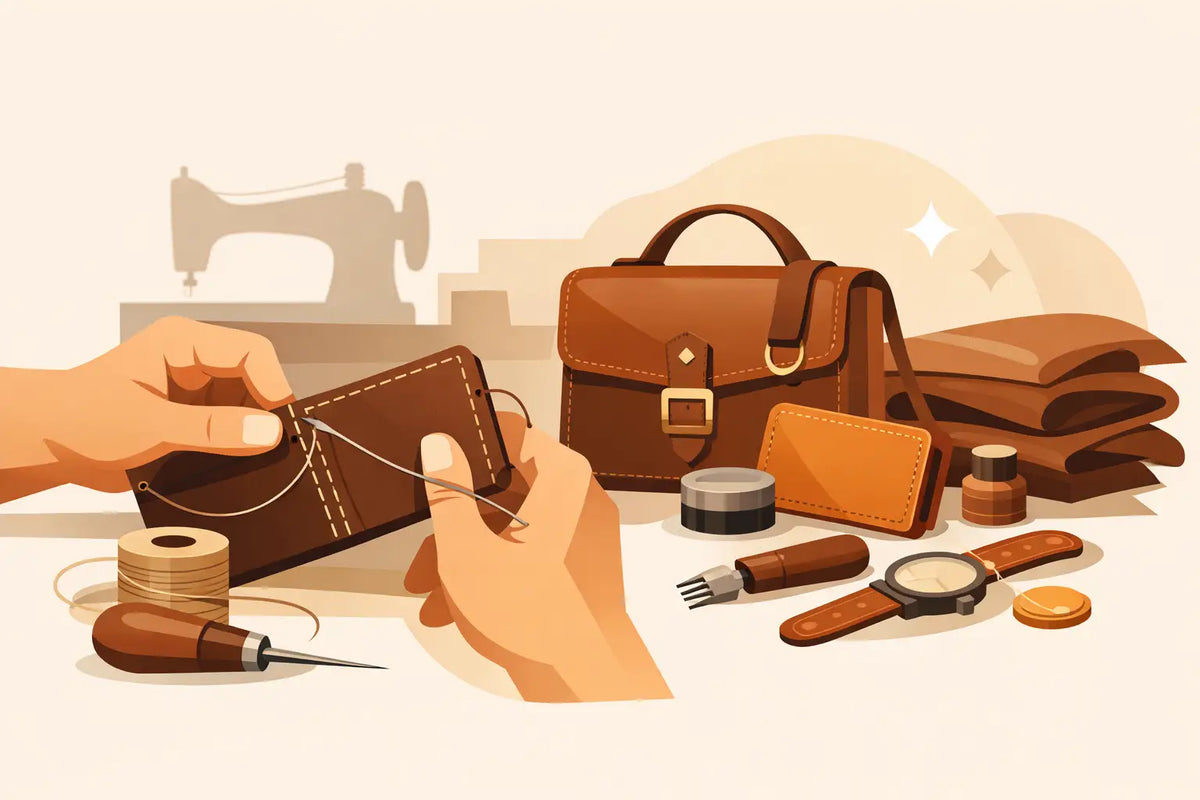
A wallet can look simple until you hold it in your hand. The edge feels smooth, the fold opens without strain, the stitching follows a clean line, and the leather begins to soften in the places your life touches most. That is where the question 手工皮件為何比較貴 begins to have a fuller answer: you are not only paying for an object. You are paying for the time, judgment, material, and human care that allow an everyday item to stay close for years.
A handmade leather piece is not automatically better simply because it is handmade. Materials can be poorly chosen, construction can be careless, and a high price alone does not prove quality. But when craftsmanship is paired with thoughtful design and fair production, the cost reflects something real: a slower process built to create more than a short-lived accessory.
手工皮件為何比較貴? Start With the Hours You Cannot See
Machine-made goods are designed for speed and repetition. This is not inherently wrong. Mass production makes useful products accessible to more people, and for a trend-led item or a temporary need, it may be the sensible choice.
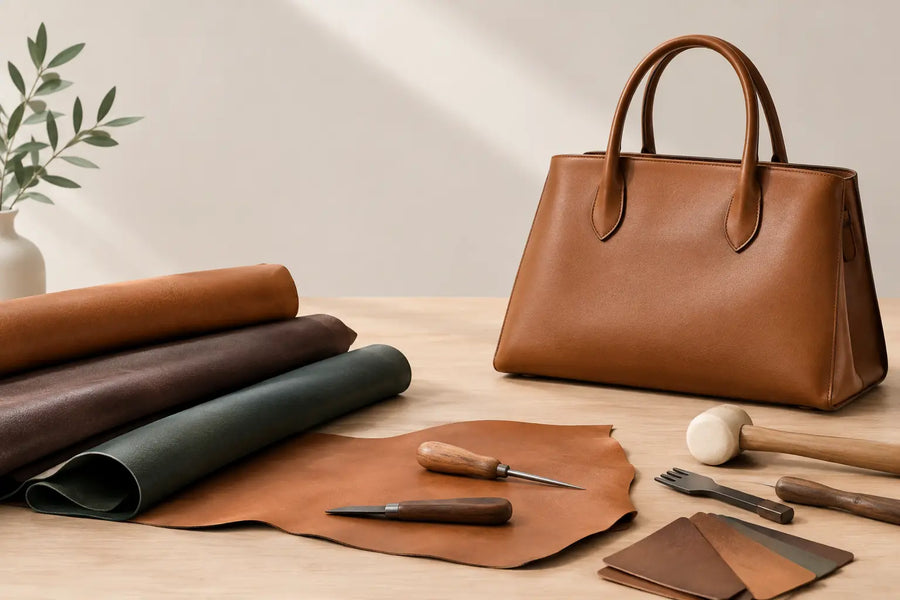
Handmade work follows a different rhythm. A maker must inspect each panel of leather, decide where to cut around natural marks, skive thickness at folds, glue and assemble components, punch or mark stitch lines, stitch, trim, burnish edges, and check the finished piece again. A card holder may be compact, but its small scale leaves little room for mistakes. One uneven edge or misplaced stitch is immediately visible.
The hours behind a hand-stitched piece do not always announce themselves in a product photo. They show up in the details that make daily use feel easier: pockets that hold their shape, corners that do not quickly split, a zipper or closure that sits properly, and edges that feel finished rather than simply cut. Time is not decoration. It is part of the structure.
Materials Set the Starting Point
Leather is not one uniform material. Its character changes with the animal hide, tanning method, thickness, finish, and the area from which it is cut. Better material costs more because it offers more to work with: strength, a balanced feel, a natural surface, and the potential to age with personality rather than simply wear out.
A maker cannot hide poor leather forever. Thin coated surfaces may look polished at first, yet they can crack, peel, or lose their appearance after repeated use. Quality leather may show small variations in grain, tone, or markings. Those variations are not defects to be erased at all costs. They are part of working with a natural material honestly.
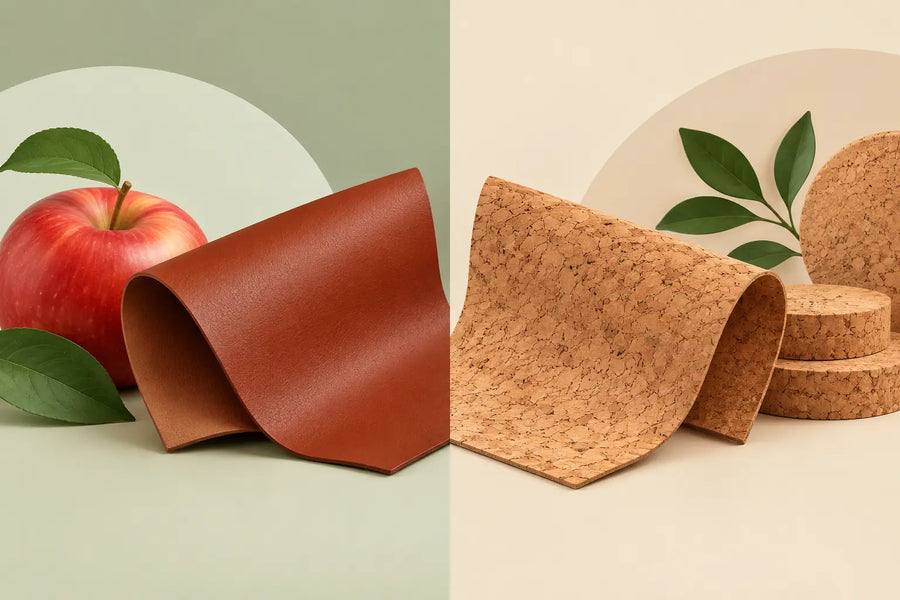
At the same time, real leather is not the only meaningful choice. Plant-based alternatives, including apple leather, can offer a different path for people who want to reduce reliance on animal-derived materials. Their performance and aging will differ from genuine leather, so the best choice depends on how you use the item and what values guide your purchase. A responsible brand should explain the material clearly rather than making broad promises.
Skill Is More Than a Beautiful Stitch Line
Hand stitching is often the detail people notice first, but leathercraft is a collection of decisions. A maker needs to know how leather will behave when folded, stretched, glued, and carried every day. They need to choose the right thickness for a slim wallet, reinforce stress points on a bag, and avoid placing a weak section of hide where a strap will pull.
Even edge finishing requires patience. Raw leather edges can feel rough and absorb moisture. To create a smooth edge, the maker may sand, apply finish, burnish, dry, and repeat. It is repetitive work, yet it changes both the touch and durability of a piece.
This is also why two items that look similar can be priced very differently. One may be assembled from standardized parts as quickly as possible. The other may involve careful cutting, hand-guided stitching, multiple finishing stages, and quality checks before it reaches you. The difference is not always dramatic at first glance. It becomes clearer with use.
A Fair Price Makes Room for People
The price of a handmade leather good should include more than leather and hardware. It should make room for training, safe working conditions, patient instruction, fair wages, and the time required to learn a craft well.
That matters deeply when craft becomes a path to participation. At Broken Fingers+, leatherwork is created in collaboration with sheltered workshops, where people with autism, Down syndrome, physical disabilities, or mental health recovery experiences can build skills through real production work. The purpose is not to turn someone’s story into a marketing label. It is to recognize capability, create opportunities for meaningful work, and let a finished object carry the dignity of being made with care.
This approach can take more time. Learning is not rushed, and quality control is part of the process. But a slower pace is not a lack of value. It is often where confidence grows: through repeating a technique, completing a task, seeing a product take shape, and knowing that someone has chosen to carry it.
When you buy from a mission-led handmade brand, you are still entitled to expect good design and useful quality. Social impact should not be used to excuse poor workmanship. The most meaningful purchase is one where the product stands on its own, while the way it was made adds another layer of purpose.
Durability Changes the Price Conversation
The least expensive option at checkout is not always the least expensive over time. A low-priced wallet that frays within a year, or a bag that loses its structure after one season, may need replacing again and again. A well-made piece can cost more upfront but remain useful longer, especially when it is cared for.
That does not mean every handmade item will last forever. Leather can scratch, darken, and absorb oils. Plant-based materials have their own limits. Hardware can wear, and no bag is designed to carry more weight than its construction allows. Longevity depends on materials, making, use, and maintenance.
Still, a piece designed for repairable, everyday use encourages a different relationship with ownership. A mark from travel, a softened fold, or a deepened color can become part of its story. Instead of expecting permanent perfection, you begin to value an item that grows more familiar with you.
How to Judge Whether the Price Is Worth It
Ask practical questions before you buy. What is the material, and how should it age? Are the edges clean and finished? Does the stitching look consistent, especially at corners and stress points? Is the design useful for the way you actually carry your cards, cash, phone, or passport?
Then ask the questions that are harder to put on a product label. Who made this? Was there time for skill and care? Does the brand speak clearly about its materials and process? Does the design feel like something you will still want to use after the novelty fades?
A handmade piece is worth paying more for when it fits your life, not when it merely signals status. Sometimes a simple card holder is the right choice. Sometimes a larger bag with thoughtful compartments earns its place because it supports your workday, commute, or travel. The best purchase is not necessarily the most expensive one. It is the one whose quality, function, and values remain meaningful after you bring it home.
The Value Is Carried Forward
Handmade leather goods cost more because they hold more human decisions within them. They ask for better materials, more careful labor, and a price that respects the people making them. For some shoppers, that will be a reason to choose one thoughtfully made piece over several quick replacements.
And when that piece is made through a process that gives skills room to grow and people room to be seen, its value continues beyond the leather. Every time you reach for it, you carry a small reminder that useful things can also be made with patience, respect, and the belief that hands have something valuable to create.