Broken Fingers+ · 品牌誌
Why Inclusive Employment Changes What We Carry

A card holder is small enough to disappear into a pocket. A wallet becomes part of the rhythm of a day. Yet the hands that cut, stitch, edge-paint, and inspect these objects should never disappear from the story.
Inclusive employment asks us to look beyond a finished product and consider the conditions that made meaningful work possible. It is not charity attached to a purchase. It is the belief that people with different abilities, health experiences, and ways of communicating deserve access to real work, fair recognition, skill development, and the pride of contributing something valuable.
For a hand-stitched leather piece, that belief can be felt in every careful line. Good work takes patience. So does building a workplace where people are respected for what they can do.
What inclusive employment really means
Inclusive employment is the practice of creating workplaces where disabled people, neurodivergent people, and people recovering from mental health challenges can participate fully and meaningfully. The word “meaningfully” matters. A role is not inclusive simply because someone has been invited into the room.
Meaningful employment offers work that has purpose, expectations that are clear, compensation that is fair, and support that helps a person succeed without stripping away their independence. It recognizes that people may need different tools, schedules, communication styles, or environments. Those adjustments are not special favors. They are practical ways to let skill show up.
In a craft setting, support might include breaking a complex production process into clear stages, offering visual instructions, allowing time to practice a repeated technique, or pairing a maker with a patient mentor. One person may excel at precise hand stitching. Another may have a strong eye for checking edges, sorting materials, or preparing components. The goal is not to force everyone into the same mold. It is to build a process that makes room for different strengths.
That distinction protects dignity. People are not valuable because they overcome an audience’s expectations. They are valuable because their work, care, and perspective have value in their own right.
Why a job is more than a paycheck
Income matters. Financial independence creates choices, security, and greater control over daily life. But employment also offers structure, belonging, and a place where a person’s contribution is visible to others.
For people who have been underestimated, excluded, or spoken for, being trusted with real responsibility can change more than a résumé. It can rebuild confidence through evidence: I learned this technique. I completed this order. My work met the standard. Someone chose and uses what I made.
This is why training alone is not enough. A workshop can teach a skill, but a sustainable employment pathway connects learning to ongoing opportunities. It allows practice to become mastery, mastery to become contribution, and contribution to become recognition.
There is also a benefit for the team. Inclusive workplaces invite colleagues and managers to communicate more clearly, plan more thoughtfully, and question narrow assumptions about speed, professionalism, and talent. That does not mean the work becomes less demanding. Quality standards still matter. In fact, clear standards often make better work possible for everyone.
Craft makes contribution visible
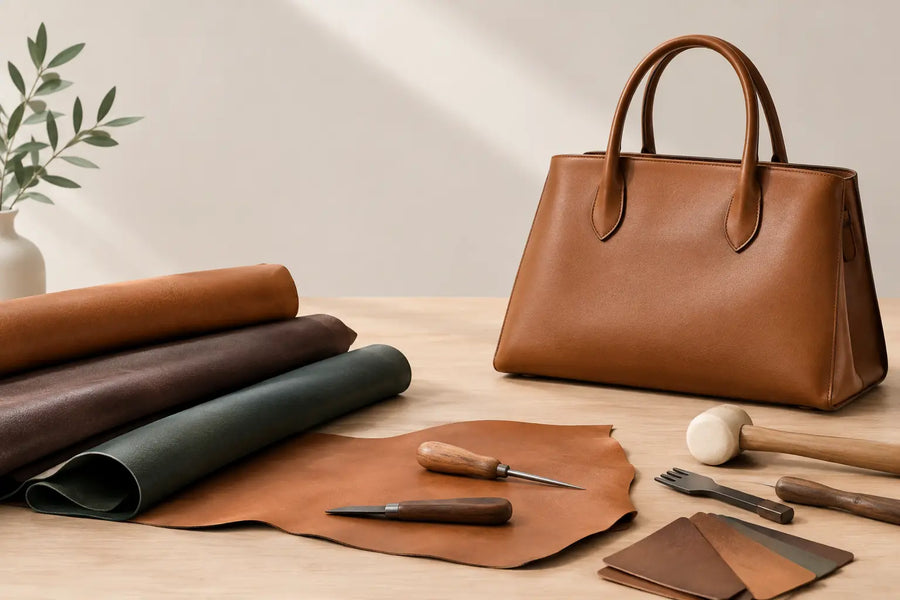
Handcrafted goods offer a powerful way to understand inclusive employment because the process is tangible. Leather does not respond well to rushing. A stitch must be placed with care. An edge requires repeated attention before it feels smooth in the hand. These are not abstract contributions hidden in a spreadsheet. They are visible choices, built step by step.
A maker’s role does not need to be romanticized to be respected. Handcraft can be repetitive. It can be difficult on the hands. It takes training, concentration, and quality control. But that is exactly why it carries weight. When a person develops capability in a demanding process, their achievement is professional, not symbolic.
At Broken Fingers+, collaboration with sheltered workshops connects leathercraft training with actual production. Makers including autistic people, people with Down syndrome, people with physical disabilities, and people in mental health recovery can participate in creating pieces meant for everyday use. The work is part of a product journey, not a side story added after the fact.
A leather bag or passport case cannot solve exclusion on its own. Still, a product can create a practical bridge between a maker’s skill and a customer’s daily life. It gives the work a market, and it gives the customer a chance to choose an object whose value includes both design and human possibility.
The difference between support and tokenism
Not every product labeled “socially responsible” creates lasting opportunity. Consumers have good reason to ask thoughtful questions, especially when a story feels more prominent than the item itself.
Tokenism happens when a person’s identity is used for emotional impact while their role, compensation, and growth remain unclear. It can reduce a capable maker to a marketing image. Genuine inclusion does the opposite: it centers the work while respecting the person behind it.
When evaluating a mission-led brand, look for substance. Does it explain how people participate in production? Is there training tied to real tasks? Does the product stand on its own for function, design, and workmanship? Are makers described with respect rather than pity? These details reveal whether social impact is built into the business or simply placed around it.
Price can be part of this conversation, too. Handcrafted products made through careful, people-centered processes may cost more than mass-produced alternatives. That does not automatically make every higher-priced item ethical, and affordability remains a real consideration for many shoppers. But when materials, labor, training, and fairer production are part of the price, choosing less often and choosing with care can be a meaningful approach.
How customers can support inclusive employment
A thoughtful purchase is one form of support, but it is not the only one. The strongest impact comes when buying habits, workplace choices, and everyday language start moving in the same direction.
Choose products for their usefulness and quality first, then learn whether the company creates real pathways for the people involved. Give a well-made wallet, pouch, or bag as a gift and share the craftsmanship behind it without turning the maker’s identity into a sentimental talking point. Let the object be admired as an object.
If you manage people, consider where your own workplace creates unnecessary barriers. Job descriptions sometimes demand traits that are not essential to the role. Interviews can reward fast verbal responses over practical ability. Training may depend on unwritten rules that leave some people behind. Small changes, such as clearer instructions, skills-based assessments, flexible communication, and consistent feedback, can widen access without lowering expectations.
And when someone speaks about disability or recovery, resist the urge to define their potential through limitation. Ask about strengths. Notice expertise. Make space for people to describe their own experience in their own words.
Inclusion is built in the details
Inclusive employment is not a campaign completed by a single hiring decision. It is built through daily details: how instructions are written, how mistakes are handled, how feedback is given, who gets trusted with responsibility, and whether growth is genuinely possible.
The same is true of a well-made leather good. Its character is not created by one dramatic gesture. It comes from the patient decisions that hold everything together - the cut, the stitch, the finish, and the care to make it last.
The next time you reach for something you carry every day, let it be a quiet reminder: work can be a place where people are not merely accommodated, but seen, trusted, and valued for what they bring to the world.