Broken Fingers+ · Journal
蘋果皮革會不會掉皮?先看材質怎麼做
If you have ever held a wallet or bag made from apple leather and quietly wondered, 蘋果皮革會不會掉皮, you are asking exactly the right question.
Not because apple leather is fragile by definition, and not because every alternative material ages badly, but because surface wear is one of the most honest tests of any daily-use accessory. A material can look refined on day one. The real question is what happens after keys, friction, corners, humidity, and a hundred ordinary commutes. That is where people stop looking at marketing language and start looking for facts.
蘋果皮革會不會掉皮?短答案是:有可能,但要看結構
The short answer is yes, apple leather can peel. But that does not mean it will peel quickly, badly, or unavoidably. Peeling depends less on the name of the material and more on how the material is constructed.
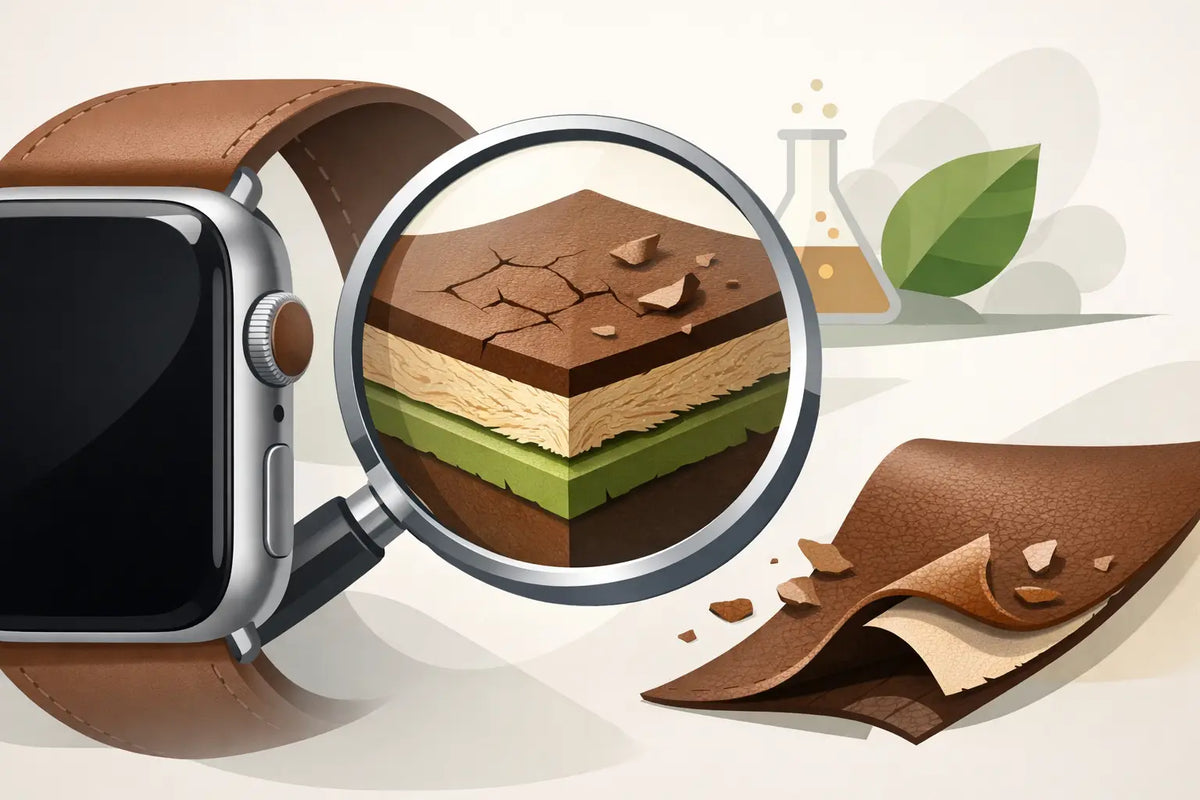
Apple leather is not a single, universal formula. In most cases, it is a composite material made by combining apple waste fibers or powder with binders and a backing layer, then finishing the surface to create the look and feel of leather. Because of that layered construction, durability varies from one manufacturer to another. Two products can both be labeled apple leather and perform very differently over time.
That is why the better question is not simply, "Does apple leather peel?" It is, "What kind of apple leather is this, and how was it made?"
Why peeling happens in the first place
When people say a material is "peeling," they are usually describing the top layer separating, cracking, or flaking away from the layer underneath. This can happen for a few different reasons.
First, surface coatings matter. Many leather alternatives rely on a finished topcoat to create color, texture, and stain resistance. If that coating is too rigid, too thin, or poorly bonded, repeated bending can weaken it. Wallet folds, bag corners, card slots, and strap edges are common stress points.
Second, the backing matters just as much as the face. A well-made material needs good adhesion between layers. If the surface and backing move differently under pressure, heat, or moisture, separation becomes more likely.
Third, daily use patterns matter. A card holder that lives in a tote bag will age differently from a wallet jammed into a back pocket every day. Constant compression, sweat, heat, and abrasion can shorten the life of almost any coated material, whether it is apple leather, PU, or even certain corrected-grain leathers.
So yes, peeling is possible. But it is usually the result of stress, construction quality, and care habits working together.
Apple leather is not the same as cheap faux leather
This is where many shoppers get stuck. They have seen low-cost synthetic bags crack and peel, so they assume every leather alternative will do the same. That is understandable, but not always accurate.
Cheap faux leather often fails because it is made with lower-grade plastics, weak bonding, and little attention to long-term flex performance. Apple leather, by contrast, is typically positioned as a more thoughtful material that incorporates plant-based content and aims for a better balance of aesthetics, feel, and environmental consideration.
That said, apple leather is still not identical to full-grain animal leather. It does not age in exactly the same way. It usually will not develop the same patina, and its long-term wear pattern depends heavily on the coating technology used. If someone promises that apple leather behaves exactly like premium full-grain leather in every condition, that is probably too simple.
A more honest answer is this: good apple leather can look elegant, feel smooth, and hold up well in everyday use, but it should be chosen with realistic expectations. It is a designed material, not a magical one.
What affects whether apple leather holds up well
The first factor is material quality. Higher-quality apple leather generally has better formulation, better finishing, and more reliable backing support. These things are hard to judge from a product name alone, which is why brand transparency matters.
The second factor is product design. Even excellent material can struggle if used in a design with constant sharp folding, overloaded seams, or exposed corners. A well-designed wallet or pouch distributes stress more evenly and reduces failure at the edges.
The third factor is craftsmanship. Clean edge finishing, careful stitching, and thoughtful reinforcement all help a product last longer. This is often overlooked, but construction is not separate from material performance. It is part of it.
The fourth factor is how the item fits your life. If you want one bag to survive heavy commuting, rain exposure, overstuffing, and rough storage, you need a material and build that are ready for that level of use. If your routine is lighter and your care is gentler, the same item may age beautifully.
Signs of a better apple leather product
You do not need a lab test to shop more wisely. There are a few practical signs that usually point to better performance.
Look for brands that explain what the material is made of rather than hiding behind vague eco language. If a brand can describe the composition, finish, and intended use clearly, that is a good sign.
Pay attention to the hand feel. A surface that feels overly plastic, brittle, or stiff may not flex as well over time. A balanced finish often feels supple but not flimsy.
Examine stress points in photos or in person. Corners, folds, strap attachments, and edges reveal a lot. If those areas already look strained when new, daily wear will not improve them.
And consider the type of item. Small accessories like card holders, zip pouches, and structured wallets often perform differently from large soft totes that take more abuse. The best material choice is usually the one that matches the job.
How to reduce the risk of peeling
If you choose apple leather, a little care goes a long way. This is not about treating your accessories like museum pieces. It is about avoiding the habits that create preventable stress.
Try not to overfill wallets or pouches. Stretching and forcing closures puts pressure on the surface and seams. Keep the item away from prolonged heat, direct sun in a parked car, or damp storage, since temperature swings and moisture can weaken coated materials over time.
For cleaning, use a soft dry or slightly damp cloth and wipe gently. Harsh cleaners, alcohol-heavy sprays, and aggressive scrubbing can damage the finish. If the item gets wet, let it air dry naturally. Skip hair dryers and heaters.
Storage also matters more than people think. When a bag is crushed under heavier items or folded awkwardly for long periods, the material remembers that stress. A simple dust bag or shelf space can make a real difference.
Is peeling a dealbreaker?
Not necessarily. Every material involves trade-offs.
Full-grain leather can scratch, darken, and absorb oils. Suede stains. Canvas picks up dirt. Coated synthetics can crack. Apple leather sits within that reality, not outside it. The goal is not to find a material that never changes. The goal is to choose one whose aging pattern, feel, values, and maintenance needs fit the way you live.
For many people, apple leather makes sense because it offers a polished look, a softer environmental story than conventional synthetics, and a thoughtful alternative for daily accessories. If that matters to you, then the question becomes less about perfection and more about informed choice.
That is especially true when the product is made with care. A well-crafted accessory carries more than function. It carries the time, skill, and dignity of the hands behind it. At Broken Fingers+, that matters as much as the material itself.
So, should you buy apple leather?
If you want a material that feels considered, looks refined, and aligns with more conscious buying habits, apple leather is worth considering. If your top priority is the aging behavior of traditional premium hide over many years of hard wear, then genuine leather may still be the better fit.
The most useful answer is not a hard yes or no. It is this: apple leather can peel, but good-quality apple leather, used in the right product and cared for reasonably well, does not deserve to be dismissed as disposable.
A thoughtful purchase starts with honest expectations. Ask how the material is built, how the item is constructed, and how you actually plan to use it. When those three things line up, what you carry every day can do more than hold your essentials. It can reflect your values without asking you to ignore quality.